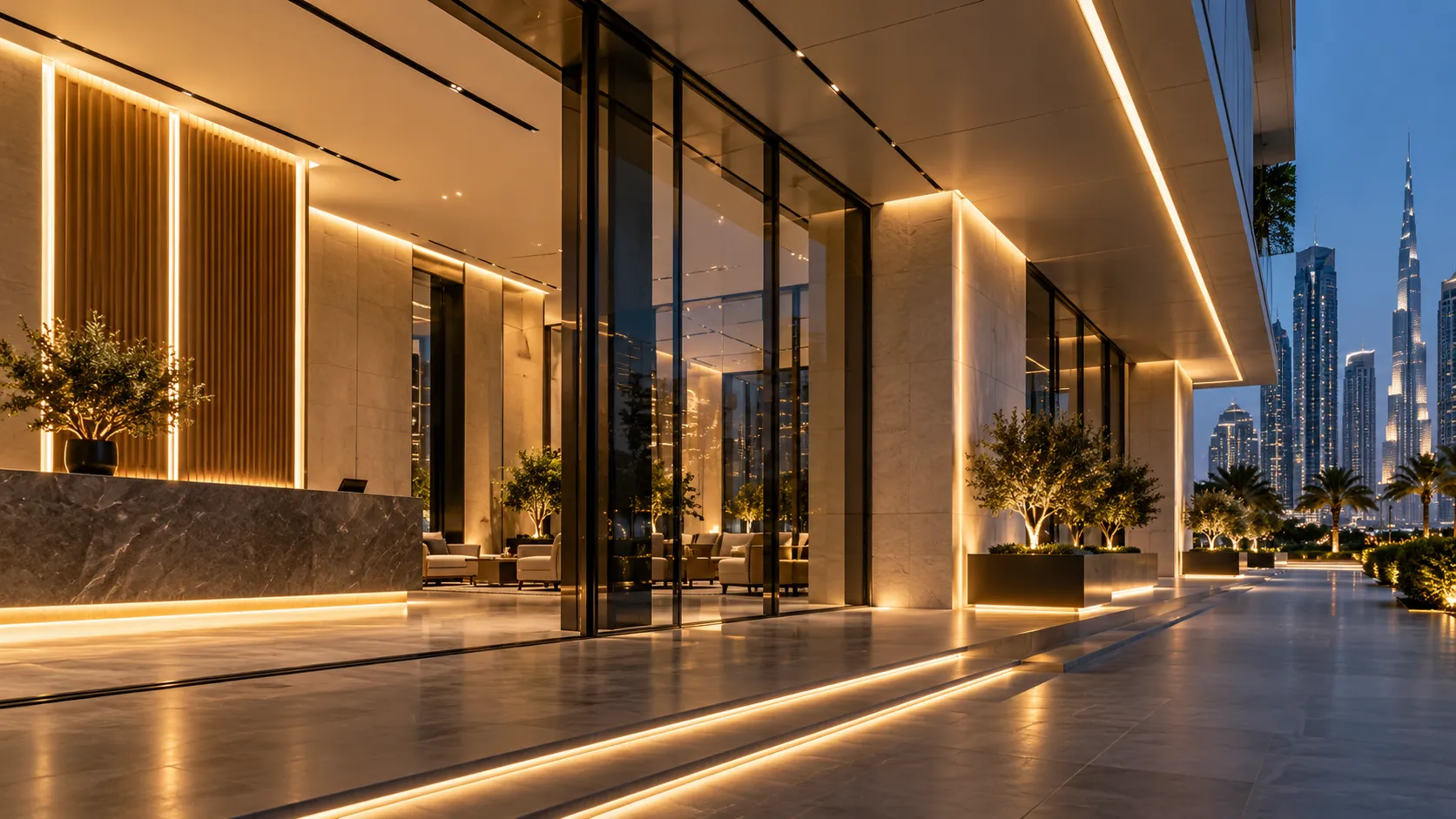
What Is Architectural Lighting?
Architectural lighting is the planned use of light to enhance the appearance, functionality and atmosphere of a building or interior space. Rather than treating lighting as a simple source of illumination, architectural lighting integrates light with the structure, materials and design of a space.
Modern architectural lighting can highlight walls, ceilings, facades, furniture, entrances, corridors and other architectural elements while providing comfortable and practical illumination.
For commercial buildings, hotels, retail stores, offices, restaurants and residential developments across the UAE and Gulf region, lighting has become an important part of the overall architectural and interior design process.
Why Is Architectural Lighting Important?
Lighting can influence how people experience a space. A well-designed lighting system can make a commercial environment feel welcoming, sophisticated, functional and visually balanced.
Architectural lighting can help:
Highlight architectural features
Create visual depth
Define different areas
Improve visibility and functionality
Create a specific atmosphere
Enhance interior materials and finishes
Support a property's visual identity
Improve the overall appearance of commercial spaces
For example, linear LED lighting can emphasise ceiling details, while recessed downlights can provide focused illumination for work areas or displays.
What Are the Main Types of Architectural Lighting?
Architectural lighting can include several different lighting techniques and products depending on the requirements of the project.
Ambient lighting provides general illumination throughout a space. Recessed downlights, linear lights and suspended fixtures are commonly used for this purpose.
Accent lighting draws attention to specific architectural or decorative elements. Spotlights can be used to highlight artwork, product displays, textured walls or furniture.
Cove and indirect lighting uses concealed light sources to create soft illumination across ceilings or walls. This technique is commonly used in hospitality and luxury interiors.
Linear LED lighting is another popular solution for modern architecture. It can be integrated into ceilings, walls, partitions, furniture and architectural details to create continuous lines of illumination.
Facade lighting is used externally to enhance the architectural appearance of buildings, entrances and outdoor areas.
How Does Architectural Lighting Improve Commercial Interiors?
Commercial interiors often need to serve several purposes at the same time. An office needs comfortable working conditions, while a retail environment may need lighting that attracts attention to products.
Architectural lighting allows designers to create different lighting layers for different functions.
For example, an office may combine general ceiling illumination with focused lighting over workstations and decorative lighting in reception areas.
In a hotel, lighting can help establish a sense of arrival at the entrance, create a relaxing atmosphere in lounges and provide practical illumination throughout guest areas.
Why Are LEDs Widely Used in Architectural Lighting?
LED technology has become an important part of modern architectural lighting because LED fixtures can provide efficient illumination in a wide range of designs and applications.
LED solutions are available in different colour temperatures, sizes, shapes, beam angles and configurations. This makes them suitable for both functional and decorative applications.
Linear profiles, LED strips, downlights, spotlights, track lighting and other LED products can be integrated into architectural elements while maintaining a clean and contemporary appearance.
Architectural Lighting for UAE and Gulf Projects
Architectural lighting requirements can vary depending on the location, building type and application. In the UAE and wider Gulf region, projects can range from luxury hospitality and retail developments to offices, villas, healthcare facilities and large commercial buildings.
Outdoor applications also require careful consideration of environmental conditions, installation locations and appropriate protection ratings.
For this reason, architectural lighting should be considered during the design and fit-out stages rather than added as an afterthought.
How Should Architectural Lighting Be Planned?
Successful lighting begins with understanding the space and its purpose. Architects, interior designers, lighting specialists and fit-out contractors should consider ceiling heights, materials, furniture layouts, natural light, electrical requirements, colour temperature and the desired visual effect.
The right combination of lighting types can create a balanced environment where functionality and aesthetics work together.
Conclusion
Architectural lighting is more than simply illuminating a building. It is a design element that can influence how people see, use and experience a space.
From linear LED profiles and recessed lighting to accent and facade solutions, the right lighting approach can complement modern architecture and interior design.
For commercial and architectural projects across the UAE and Gulf region, integrating lighting into the design and fit-out process can help create spaces that are functional, visually distinctive and suited to their intended purpose.