Top Architectural Lighting Trends for Commercial Buildings in the UAE
Commercial architecture in the UAE continues to evolve, with offices, hotels, retail spaces and mixed-use developments placing greater emphasis on design and user experience.
Lighting is an important part of this transformation. Modern LED technology allows architects and designers to integrate illumination into ceilings, walls, furniture, facades and other architectural elements.
Here are some of the key architectural lighting trends influencing commercial projects.
1. Integrated Linear LED Lighting
Linear LED lighting continues to be widely used in contemporary architecture.
It can be integrated into ceilings, walls, corridors, partitions and furniture to create clean lines of illumination.
Unlike conventional fixtures that may appear as separate objects, integrated linear lighting can become part of the architecture itself.
2. Minimalist Recessed Lighting
Minimalist interiors are driving demand for discreet lighting solutions.
Recessed downlights and trimless fixtures can provide illumination while maintaining a clean ceiling appearance.
This approach is particularly suited to offices, hospitality environments, luxury residences and modern retail spaces.
3. Layered Lighting
Rather than relying on one type of fixture, designers are increasingly combining multiple lighting layers.
Ambient lighting provides general illumination, task lighting supports specific activities and accent lighting highlights architectural or decorative elements.
This creates greater flexibility and visual depth.
4. Lighting as an Architectural Feature
Lighting is no longer always hidden.
Decorative pendants, illuminated ceiling features and sculptural fixtures can become focal points within reception areas, restaurants and hospitality spaces.
The lighting fixture itself can contribute to the identity of the interior.
5. Smart Lighting Controls
Commercial buildings are increasingly incorporating lighting control systems.
Dimming, scheduling, occupancy sensing and scene control can allow lighting to respond to how spaces are being used.
For large projects, lighting controls can also support operational and energy-management strategies.
6. Human-Centred Lighting
Lighting design is increasingly considering how occupants experience a space.
Offices, hotels and healthcare environments may use different colour temperatures and lighting levels according to the function of individual areas.
The goal is to create spaces that are visually comfortable and appropriate for their intended use.
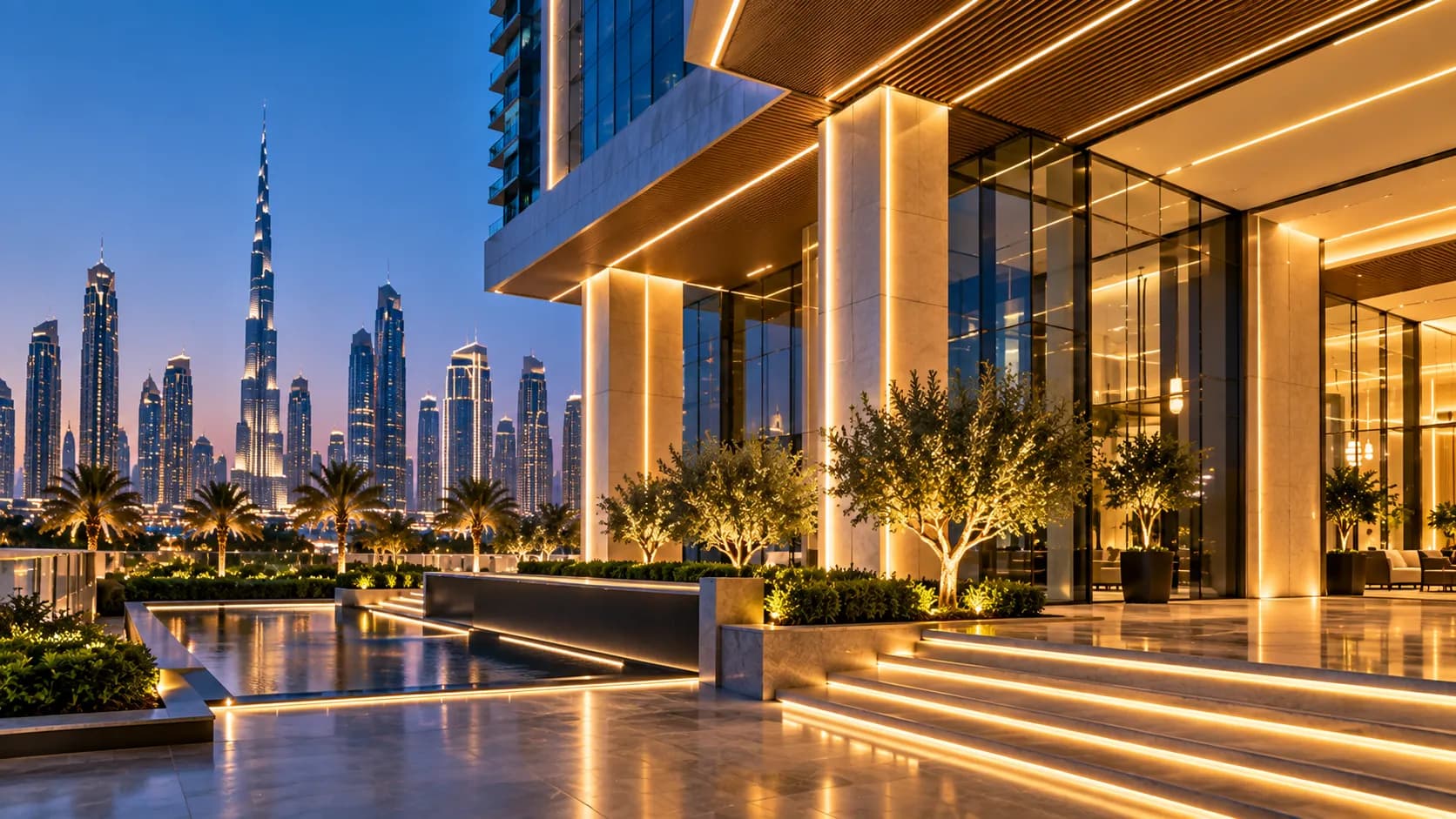
7. Architectural Facade Lighting
Exterior lighting can transform the appearance of a building after sunset.
Linear LED systems, wall washers and accent fixtures can highlight architectural forms, entrances, columns and facade materials.
In the UAE, facade lighting is particularly relevant for hotels, commercial buildings, retail developments and landmark properties.
8. Sustainable LED Solutions
Energy efficiency continues to influence lighting specifications.
LED technology can provide efficient illumination while offering a wide range of design possibilities.
For commercial developments, efficient fixtures combined with appropriate controls can form part of a broader building strategy.
9. Custom Lighting Solutions
Standard fixtures do not always meet the requirements of complex architectural designs.
Custom linear profiles, integrated LED systems and application-specific lighting solutions can help designers achieve particular dimensions, shapes or installation details.
10. Lighting Designed Into the Fit-Out From the Beginning
One of the most important trends is the closer integration of lighting with architectural and interior design.
Rather than selecting lighting after the ceiling and furniture designs have been finalised, lighting is increasingly considered during the early design stages.
This allows electrical, ceiling, joinery and architectural requirements to be coordinated more effectively.
Conclusion
Architectural lighting in the UAE is moving toward solutions that combine design, technology, functionality and integration.
From linear LED systems and minimalist recessed fixtures to smart controls and facade lighting, modern solutions provide architects and designers with greater flexibility.
For commercial developments, successful lighting begins with understanding the architecture and integrating the lighting strategy into the project from the early design stage.